


How to Brew Oolong Tea: Temperature, Ratio and Steeping Times
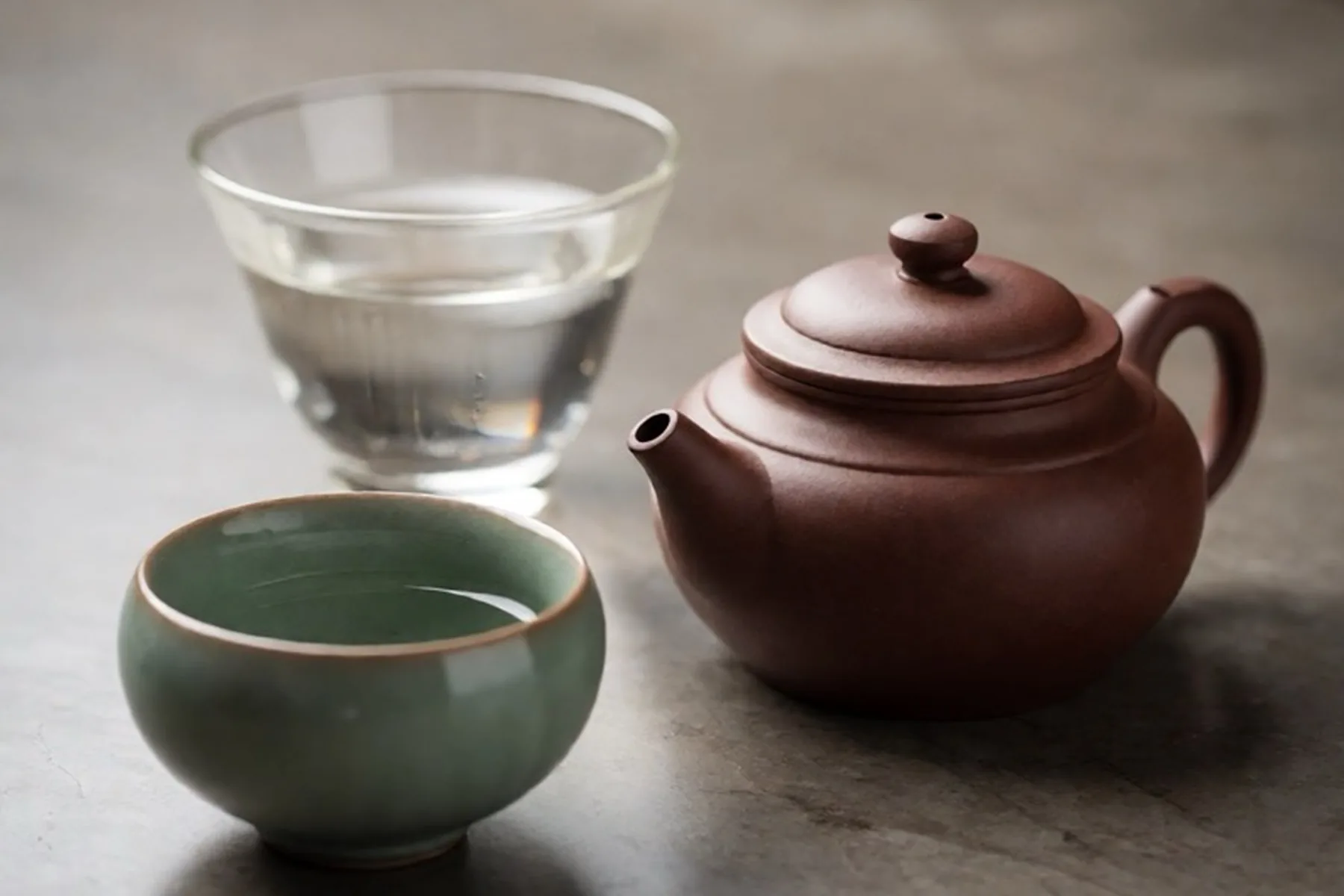
Oolong tea occupies a wide middle ground between green and black tea. Some oolong is rolled into tight green beads; some is twisted into long dark strips; some is lightly oxidized and floral, while other styles are roasted until the leaves smell warm and toasty. That range is the pleasure of oolong, and also the reason a single brewing instruction rarely works for every bag.
The good news is that oolong is forgiving once you understand three variables: water temperature, leaf-to-water ratio and time. Start with a reasonable method, taste the tea, then adjust one variable at a time. This guide gives practical starting points for gongfu-style brewing and a simple western mug method, with separate guidance for Tie Guan Yin, Phoenix oolong and roasted oolong.
Why oolong needs its own brewing method
Oolong leaves are often rolled or twisted, so they need a little time and heat to open. A tightly rolled Tie Guan Yin may look like a small amount of tea in the vessel, then expand dramatically after the first infusion. A long twisted Phoenix oolong leaf may release aroma quickly but take longer to fit comfortably into a small gaiwan. Roasted oolong may need hotter water to bring out its deeper notes without making the cup feel flat.
If you brew all oolong like a delicate green tea, the leaf may stay tightly closed and the cup can taste thin. If you treat every oolong like a dark roasted tea, a light floral style may become bitter. The useful approach is to identify the leaf shape and roast level, then choose a starting temperature and adjust from there.
Start with three variables
Every successful infusion is a balance of temperature, leaf ratio and time. More leaf or hotter water extracts more quickly; less leaf or shorter time extracts more slowly. Changing all three at once makes it difficult to learn what the tea needs.
For a first brew, choose a moderate temperature, a measured amount of leaf and a short infusion. Taste the result, then decide whether the next cup needs more aroma, more body or less bitterness. This is more reliable than following a different recipe for every tea name.
Water temperature by oolong style
Many oolong teas work well in the 90–100°C range, but the ideal point depends on oxidation, roast and leaf style. A practical starting point is 90–95°C for a light, floral rolled oolong; 95–100°C for a twisted Phoenix oolong; and 95–100°C for a medium or heavily roasted oolong. These are starting points, not strict rules.
| Oolong style | Starting temperature | Why |
|---|---|---|
| Light floral Tie Guan Yin | 90–95°C | Preserve lifted aroma and avoid extracting too much astringency too quickly. |
| Phoenix Dan Cong / twisted oolong | 95–100°C | Help the long leaves open and release their aromatic layers. |
| Medium or dark roasted oolong | 95–100°C | Warm the roast notes and give the denser leaf enough energy to unfold. |
| Aged or tightly compressed oolong | 95–100°C | Use a longer first rinse or a slightly slower start if the leaf is tightly packed. |
If your water is very soft, the tea may taste thin; if it is heavily mineralized, aroma can feel muted. Filtered water with a moderate mineral content is a good default. Let boiling water cool for a minute or two when you need a lower temperature, or use a temperature-controlled kettle.
Leaf-to-water ratio for gongfu brewing
A practical gongfu starting point is 5–7 grams of oolong per 100–120 ml of water. Use the lower end for a small gaiwan, a very tightly rolled tea or a tea you plan to infuse many times. Use the higher end for a larger vessel, a loosely twisted leaf or a tea you want to taste more intensely.
Weigh the leaf the first few times. Volume is misleading because a rolled oolong can look like very little tea while a twisted oolong occupies much more space. Once you know how the leaf behaves, you can estimate by eye. If the first infusion is too strong, reduce the leaf or shorten the time; do not immediately change the temperature and the leaf amount together.
For western-style brewing, use less leaf: about 3 grams per 250 ml of water is a reasonable starting point. The larger water volume and longer steep make the cup more forgiving, but the same rule applies: taste first, then adjust.
Gongfu brewing, step by step
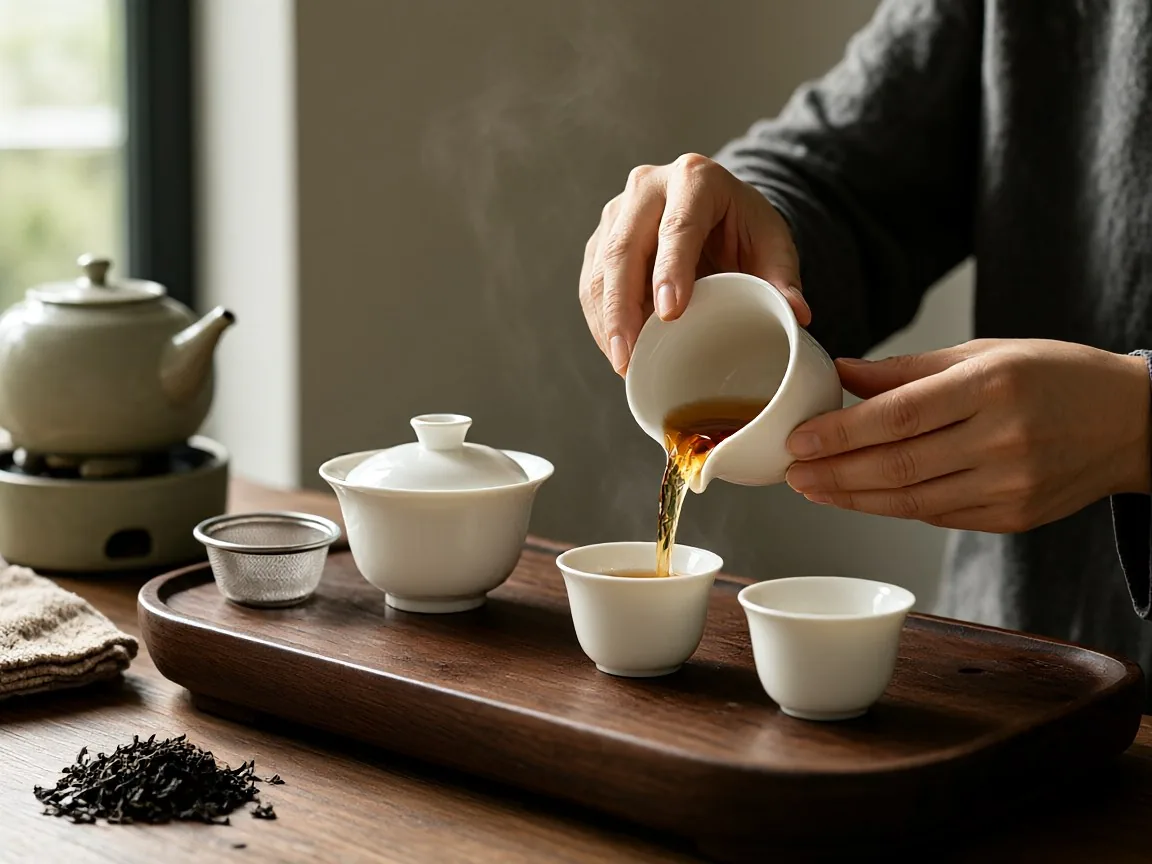
Warm the gaiwan, fairness pitcher and cups with hot water, then discard the water. Add the measured oolong leaves and smell them while the vessel is warm; this gives you a preview of the roast and aroma. Pour hot water into the gaiwan, then pour it out quickly for an optional rinse. A short rinse can wake up the leaf and remove surface dust, but very light oolong may not need one.
For the first infusion, start with 10–15 seconds. Pour the tea through a strainer into the fairness pitcher, then serve. Do not leave the leaves sitting in water between infusions unless you intend to brew them again immediately. For the next infusions, add 5–10 seconds each time. A tightly rolled tea may need a slower start; a roasted tea may release more quickly after the first two infusions.
A gaiwan is useful because you can see and smell the leaf, but a small teapot works too. Use the vessel you can handle safely. If the rim is hot or the pour is awkward, a slightly larger gaiwan or a teapot with a filter may be a better choice. Our guide to gaiwan versus teapot for oolong tea explains the trade-offs.
A simple western mug method
Put about 3 grams of oolong in a 250–300 ml mug or small teapot. Add water at the temperature suggested for the tea style and steep for 2–3 minutes. Taste at two minutes; if the cup needs more body, give it another 30 seconds. Remove the leaves when the tea reaches the strength you like.
This method is less precise than gongfu brewing, but it is useful for a first taste and for busy mornings. A larger leaf may need a little more time, while a finely broken leaf may release quickly. If the result is bitter, use less leaf, a lower temperature or a shorter steep. If it is thin, increase the leaf before increasing the time dramatically.
Steeping times and how to adjust them
For gongfu brewing, a first infusion of 10–15 seconds is a safe starting point for many oolong teas. The second and third infusions can stay close to that, then gradually increase. A rolled tea may give five or more pleasant infusions; a twisted or heavily roasted tea may change more quickly. Keep notes for the first few sessions.
Bitterness usually means too much heat, too much leaf or too long a steep. A thin or flat cup may need more leaf, slightly hotter water or a longer infusion. Aroma that disappears quickly can sometimes be revived with a slightly hotter second pour, but do not force a delicate tea with boiling water.
Water temperature also drops as you pour. Preheat the vessel and keep the kettle nearby. If the tea is brewed in a cold gaiwan on a cool day, the actual temperature in the vessel may be lower than the kettle display. Small adjustments matter more than a perfect number.
Water, vessels and the role of the cup
Use water you would drink on its own. Heavy chlorine or an unpleasant mineral taste will show up in the tea. Filtered water is a practical baseline. The vessel should be clean and free of soap residue; porcelain is neutral and makes it easy to judge color and clarity. A small cup helps you notice aroma and temperature before the tea cools; our handmade white porcelain tea cups are one option.
Our gaiwan size guide can help you match capacity to the number of drinkers and the size of your cups. A fairness pitcher is useful when you brew several infusions or serve more than one person, because it collects the whole pour at the same strength.
Common oolong brewing mistakes
- Using boiling water for every style without tasting the result.
- Adding too much leaf to a small gaiwan and then blaming the tea for bitterness.
- Leaving the leaves in the water between infusions.
- Using a cup that is too large to notice the aroma.
- Changing temperature, leaf and time all at once.
- Judging a tea from the first infusion before the leaf has opened.
- Storing tea near spices, incense or strong odors.
If you want to compare several oolongs, start with a small sampler rather than opening many large bags at once. Our loose-leaf oolong sampler is designed for that kind of tasting, while a white porcelain gaiwan set keeps the brewing vessel neutral. For a gift, a gaiwan and oolong gift box combines the vessel and tea in one package.
Storage after brewing
Keep dry oolong leaves sealed, away from light, heat and strong smells. A small tin or resealable bag is enough for daily tea. Do not put tea in the refrigerator unless it is properly sealed and you have a clear reason to do so; condensation and food odors can damage the leaf. Our tea storage guide covers light, air and odor in more detail.
Brewed leaves should not be kept for days. If you want to brew the same leaves again, keep them cool and use them within a short window. When in doubt, start fresh. Oolong is enjoyable because it changes across infusions; that pleasure depends on clean water, appropriate heat and leaves that have been stored well.
Frequently asked questions
What temperature should I use for oolong tea?
Start around 90–95°C for a light floral rolled oolong and 95–100°C for twisted, roasted or denser styles. Adjust based on taste rather than treating one number as universal.
How much oolong tea should I use?
For gongfu brewing, start with 5–7 grams per 100–120 ml. For a western mug, about 3 grams per 250 ml is a practical starting point.
How long should the first oolong infusion steep?
About 10–15 seconds is a useful starting range for gongfu brewing. Taste the first cup and increase the next infusion gradually.
Should I rinse oolong tea?
A quick optional rinse can warm the leaf and remove surface dust. It is not mandatory for every oolong, especially a very clean light tea.
Can I brew oolong more than once?
Yes. Many oolong teas are designed for multiple infusions. Increase the time slightly with each round and stop when the tea becomes thin or unpleasant.
Is oolong tea better in a gaiwan or a teapot?
Both can work. A gaiwan gives you more control and lets you watch the leaf; a teapot can be easier for larger volumes or for people who find a hot gaiwan awkward.