


Gaiwan vs Teapot for Oolong Tea: Which Should You Use?
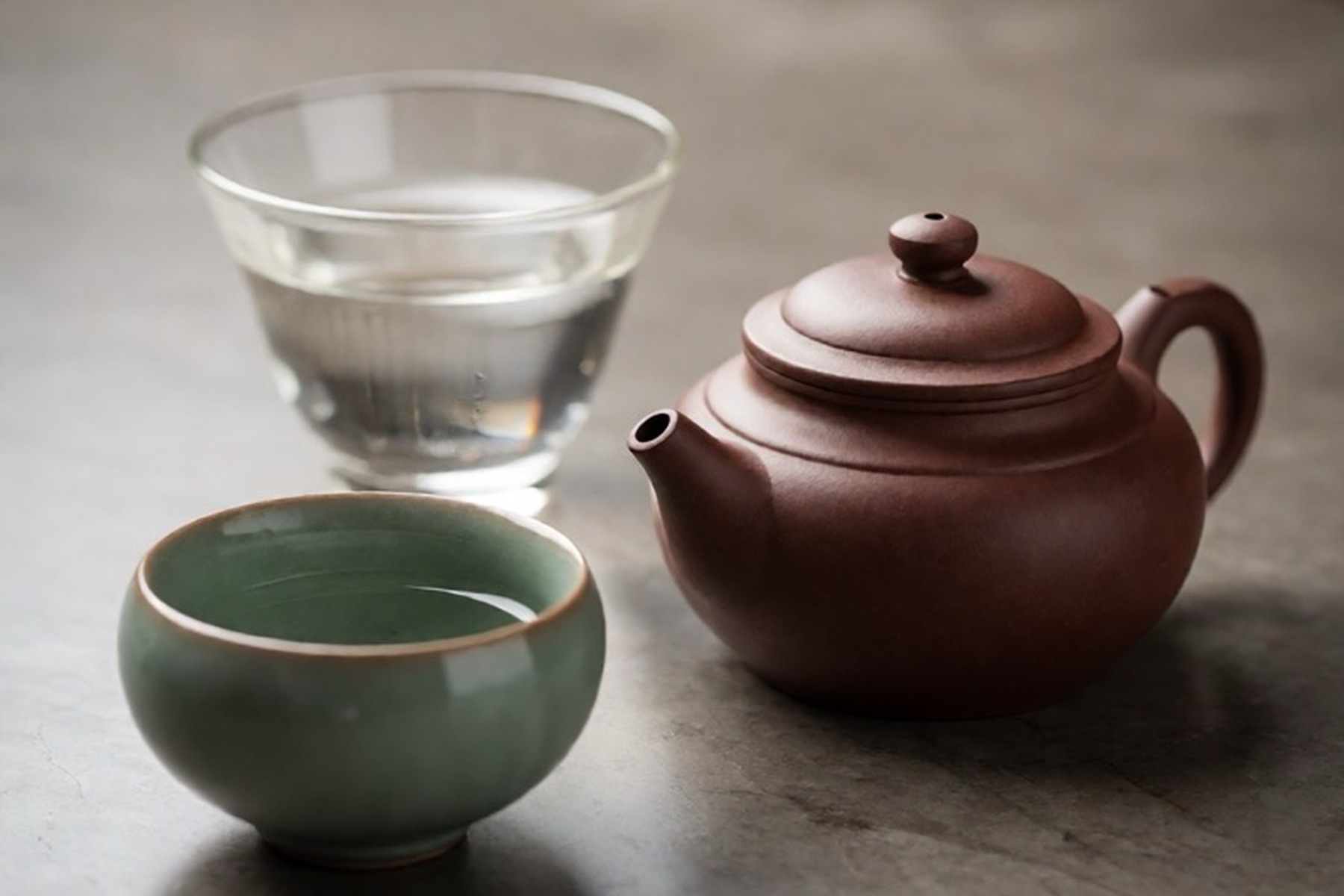
A gaiwan and a teapot can brew the same oolong, but they give you different control. A gaiwan is best when you want to watch the leaves, smell each infusion and change timing quickly. A teapot is easier for larger servings, steadier heat and a slower table.
Neither vessel is universally better. The right choice depends on how much tea you make, how familiar you are with the leaf and whether you are brewing for one person or a group.
Key takeaways
- Use a gaiwan for control and short repeated infusions.
- Use a teapot for capacity, heat retention and convenience.
- Keep the leaf-to-water ratio consistent when comparing.
- Adjust steep time rather than adding more leaf.
- Preheat either vessel before the first pour.
How the vessel changes the brew
A gaiwan is a lidded bowl with no strainer built in. You control the pour with the lid, which makes it easy to smell the wet leaf and stop a steep quickly. The tradeoff is technique: the rim gets hot, and a fast pour takes practice.
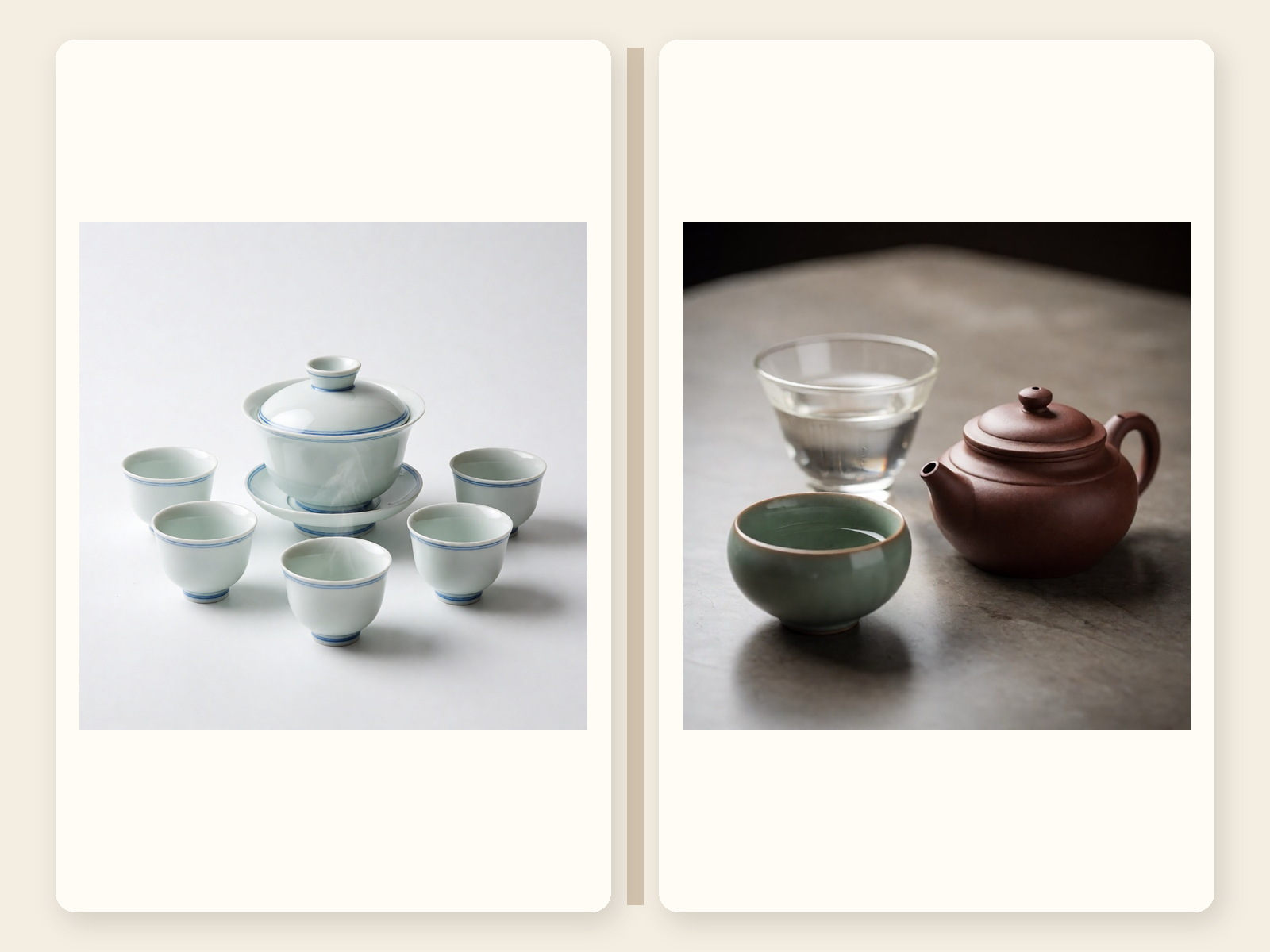
A teapot holds heat more steadily and separates the leaf from the cup, so it is easier to serve several people. The shape can also change how the leaf expands. A tightly packed ball of oolong needs room; a small pot can crowd it.
Heat retention and flavor
Porcelain heats quickly and cools quickly. A gaiwan is responsive: preheat it, add water and you can make a short, fragrant infusion without the tea sitting in a large mass of hot ceramic. A clay or thick ceramic teapot holds heat longer, which can suit roasted oolong or a tea you want to steep more gently.
Heat is not the only factor. A wide gaiwan exposes more surface area and releases aroma, while a closed pot traps steam and fragrance. Taste the same tea in both before deciding which one suits your palate.
Capacity for one or four
A 100–120 ml gaiwan is practical for one or two drinkers using small cups. A 200–300 ml teapot is easier for a group. Do not fill a large vessel and then use the same amount of leaf as a small one; scale the leaf and water together so the ratio stays stable.
Which oolong suits which vessel?
Rolled oolong, floral Tie Guan Yin and lightly roasted leaves work well in a gaiwan because you can see them open and make quick infusions. Roasted oolong and older leaves can do well in a teapot where heat is steadier. The vessel should serve the tea, not fight it.
A simple comparison method
Use the same water, leaf and ratio in both vessels. For every 100 ml of water, start with 5–6 g of oolong, water around 90–100°C and a first infusion of 15–30 seconds after a quick rinse. Keep the second and third infusions short. If the tea becomes bitter, reduce time before reducing the leaf.
What about convenience?
A teapot makes a larger serving with less handling. A gaiwan requires more attention but gives a clearer view of the leaf. For a quiet solo tasting, the gaiwan is often more expressive. For a shared meal or a busy morning, the teapot is easier to live with.
Cleaning and care
Rinse porcelain with warm water and mild soap only when necessary. Avoid sudden temperature changes. Unglazed clay should be dedicated to similar teas and should not be scrubbed with detergent. Dry both vessels fully before storage.
Frequently asked questions
Can a beginner use a gaiwan?
Yes. Start with less water and a larger rim. A slightly lower fill makes the lid easier to control.
Does a teapot make tea stronger?
It can, because heat stays higher and the leaf may remain in contact longer. Adjust the steep time and leaf amount.
Which is better for oolong?
A gaiwan gives more control; a teapot gives more capacity and heat. Both are valid depending on the tea and occasion.
Bottom line
Choose a gaiwan when control and aroma matter most. Choose a teapot when you need capacity and steadier heat. Browse our oolong and white teas and porcelain tea ware to build the setup that fits your table.