


How to Choose a White Porcelain Tea Set: Pieces, Glaze and Gifting
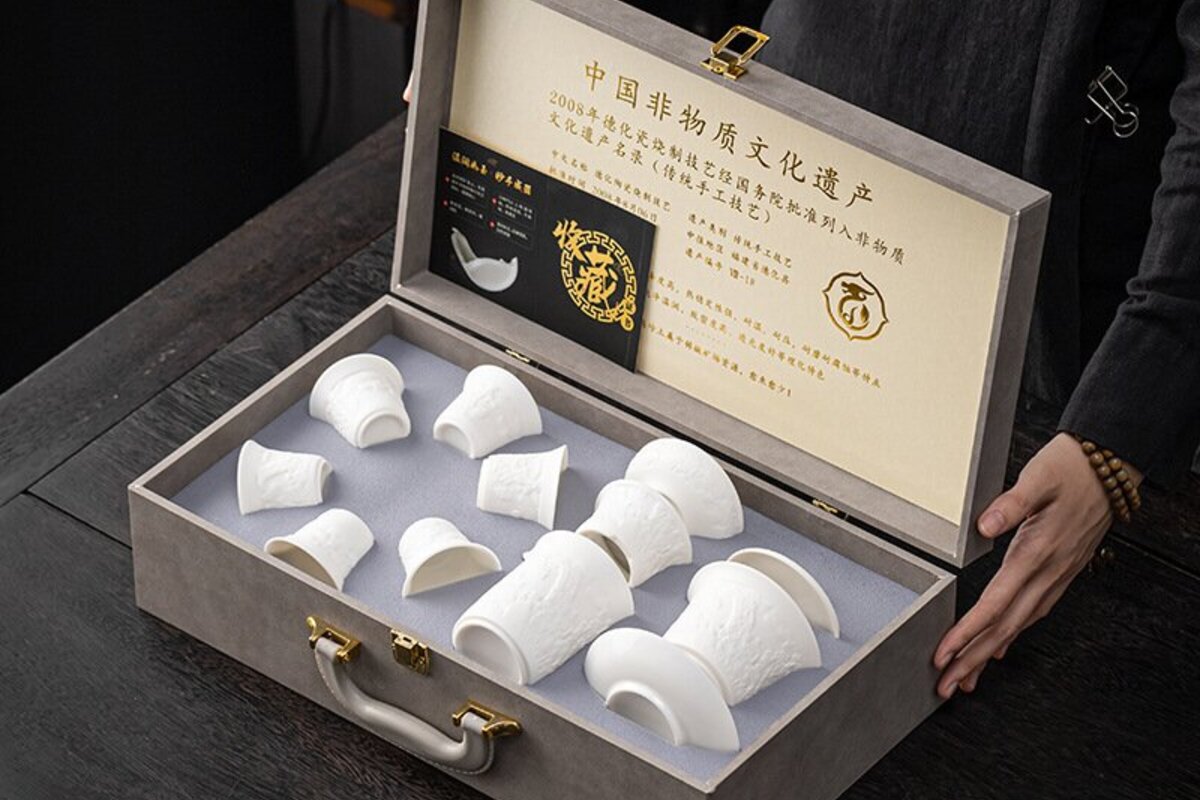
A white porcelain tea set is one of the clearest ways to build a tea table. The pale surface shows the color of the liquor, the glaze does not impose a flavor and the pieces can move from an everyday kitchen to a formal gift box without changing character. The challenge is choosing the right combination of pieces rather than buying the largest set available.
Start with the way you brew. A gaiwan-led set suits short infusions and one or two people. A teapot-led set may be easier for larger volumes or for a household that prefers pouring from a pot. Some sets include both, along with a fairness pitcher, strainer and cups.
What a useful set should include
At minimum, a gongfu tea set needs a brewing vessel and cups. A practical service usually adds a fairness pitcher and a strainer. A tray is helpful but can be bought separately. A gift box is packaging, not a brewing requirement, although it matters when the set is intended as a present.
Check the exact contents of the listing. A nine-piece gaiwan set may include one gaiwan, one pitcher, six cups and a strainer group. A teapot-led set may include a teapot, gaiwan, pitcher, strainer and cups. Do not assume two sets of the same headline count contain the same pieces.
Gaiwan-led or teapot-led?
A gaiwan gives direct control over the leaf and is easy to inspect while brewing. It is compact and works well for oolong, white tea and other whole-leaf teas. A teapot can be more comfortable for larger infusions and for serving several people without holding a hot lidded bowl. A set that includes both offers flexibility, but only if the pieces are well proportioned to each other.
Read How to Use a Gaiwan and Gaiwan vs Teapot before choosing a primary vessel.
What white porcelain means
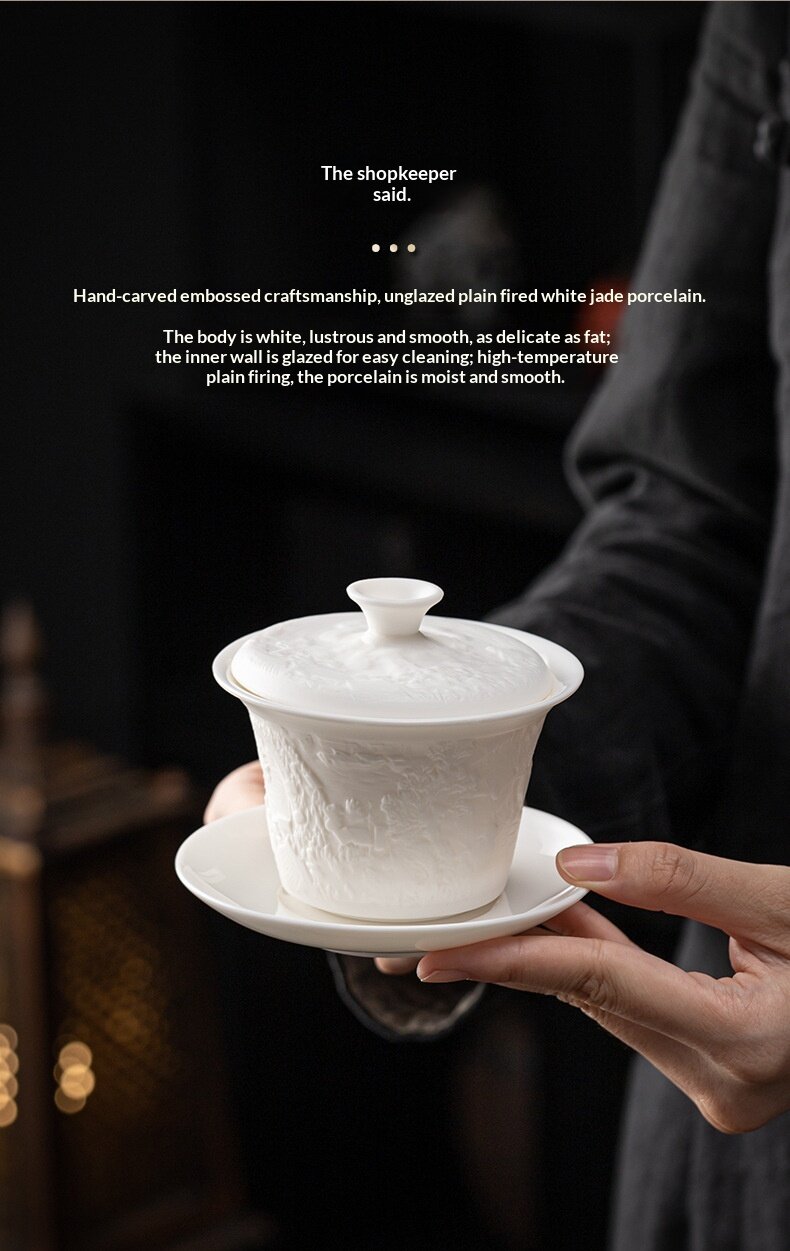
White porcelain is a broad description. The body is often made with kaolin clay and fired at high temperature, producing a dense, pale surface. The glaze may be glossy, satin or softly jade-like. Terms such as Chinese white, pearl white or mutton-fat jade describe an appearance; they are not a guarantee of a particular clay recipe or price.
Look at the rim, foot and handle. A well-finished rim should feel smooth, the foot should sit without rocking and the handle should leave room for the fingers. On a teapot, check that the lid fits evenly and the spout lines up with the handle. On a pitcher, look for a clean pouring lip.
How many cups do you need?
For one person, two or three small cups can be enough for tasting several infusions. For a family or tea group, six cups are more practical. Consider the capacity of the brewing vessel and pitcher. A set that brews more tea than the cups can hold is awkward; a tiny set used for six people means constant refilling.
Inspect the glaze and body
White surfaces reveal inconsistency. Look for color variation across the set, pooling at the rim and bubbles or pits in the glaze. The inside of a gaiwan or teapot should be smooth and easy to rinse. A little variation is normal in handmade porcelain, but sharp edges, cracks or a rocking foot are not.
Ask how the pieces should be cleaned. High-fired glazed porcelain is generally easy to rinse, but the seller’s instructions remain the correct source. Do not assume that every white porcelain piece is dishwasher safe.
Choosing a gift set
A gift set works when it matches the recipient’s tea habit. A beginner may appreciate a simple gaiwan, pitcher and cups. A frequent tea drinker may value a larger teapot or a set with a fitted case. If the recipient already owns a tray and cups, a new pitcher or a pair of brewing vessels may be more useful than another complete box.
Check the packaging for safe transport. Porcelain should not knock against hard accessories in the box. A fitted insert is better than loose tissue. Include the care card and a short note about the pieces. See A Tea Gift Set for Beginners for a broader gift checklist.
Care and storage
Rinse with warm water after use, use a soft cloth for tea oils and dry every piece before closing the box. Avoid sudden temperature changes, abrasive pads and stacking heavy cups directly on delicate rims. Store the lid separately from a damp gaiwan. Read Caring for White Porcelain.
A simple buying checklist
- What brewing vessel leads the set?
- How many cups are included, and what size are they?
- Is a pitcher and strainer included?
- Does the box fit the way the recipient stores tea?
- Are the glaze and material described accurately?
- Can the pieces be replaced if one breaks?
Frequently asked questions
Is a nine-piece tea set enough for two people?
Usually, yes. One gaiwan, a pitcher, six cups and a strainer allow several infusions and shared tasting. Confirm the capacity of each piece.
Does white porcelain make tea taste different?
Glazed porcelain is valued for being neutral. It should not add a noticeable flavor when kept clean.
Can I use a white porcelain set for every tea?
Yes, if the pieces are clean and the brewing vessel suits the leaf. Dedicated clay ware is a separate choice.
Is an expensive set always better?
No. Check the foot, rim, lid fit, spout, glaze and consistency before judging by price.
Gaiwan-led and teapot-led sets
A gaiwan-led set usually starts with a lidded bowl, then adds a pitcher, cups and a strainer. It is compact and gives the brewer direct control. A teapot-led set may replace the gaiwan with a pot or include both. The right choice depends on the volume you brew and the pouring action you find comfortable.
Compare the total capacity of the brewing vessel with the pitcher and cups. A nine-piece gaiwan set can be enough for a small tea table, while a teapot-led set may be more comfortable when serving several people. Do not judge the set only by the number of pieces. A small set with well-matched volumes is more useful than a large set that cannot pour cleanly.
Inspect the porcelain in person
Turn every piece over. The foot should sit flat without rocking. Run a fingertip around the rim and look for sharp spots. Place the lid on the gaiwan or teapot and check for a consistent gap. Fill the pitcher with water and pour slowly. Look at the spout after pouring: it should stop cleanly rather than running down the side.
Hold the cups up to a window if the porcelain is translucent. Look for an even white tone rather than a pink or grey cast. Small pinholes, dark specks or glaze pooling may be visible in a hand-made piece; evaluate whether they affect the rim or interior. A beautiful cup with a rough drinking edge is not a good daily cup.
Build for the household, not the photograph
A household of two does not need twelve cups simply because a set looks generous online. A larger group may need six cups and a pitcher that can serve them without a second pour. Count the people who actually sit at the table and the number of infusions you normally drink. Then choose the smallest set that serves that routine comfortably.
Think about storage as well. A fitted gift box is excellent for presentation but may take too much shelf space for daily use. A smaller tray or open shelf storage can be more practical. Store the box separately if it is needed for gifting or seasonal use.
Packaging and presentation
Check that every cup sits in a separate recess and that the lid cannot slide against another piece. A fitted insert should hold the porcelain securely without pressing on the rim. Keep the care card and product information in a flat envelope. If you are shipping the set as a gift, confirm that the outer box has enough padding and that the inner pieces cannot move during transit.
Budget, replacement and collecting
A first white porcelain set does not need to be the largest or most decorative option. Spend first on a brewing vessel that pours cleanly, a pitcher that fits it and cups that are comfortable to drink from. A simple glazed set can be used every day and replaced piece by piece if one cup breaks.
If you collect porcelain, record the product name, glaze and size so later replacements are easier to match. Ask whether individual cups or pitchers are sold separately. A matched box is convenient, but long-term ownership is easier when the pieces can be maintained as a group rather than treated as an inseparable display object.
Before the return window closes, use the set once with water and confirm that every piece feels comfortable in the hand.
Bottom line
Choose a white porcelain tea set by the tea you brew, the number of people you serve and the pieces you will actually use. Compare the Qingming Scroll nine-piece set and the Fengjiutian teapot-led set, then browse the white porcelain collection.