


How to Use a Gaiwan Without Burning Your Fingers
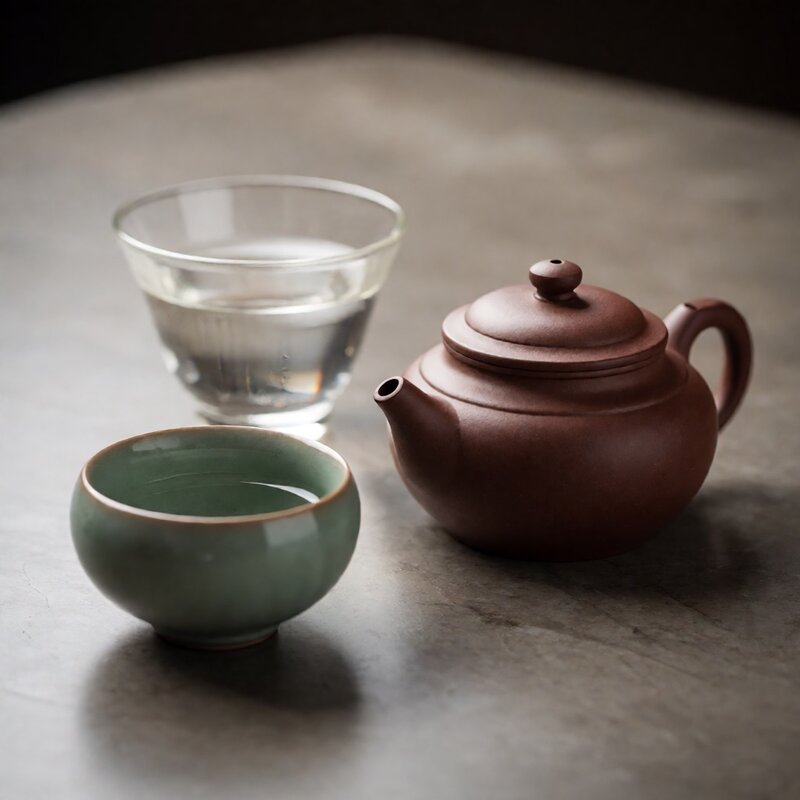
A gaiwan is a lidded bowl with a saucer. It has no spout and no filter basket, which is exactly why it is useful: you can see the leaf, smell the tea and pour quickly. The first few attempts can feel hot and clumsy. A few small habits make the whole process calmer.
Choose a manageable size
For one person, a gaiwan around 100 to 150 milliliters is comfortable. A larger bowl looks generous but becomes heavy when full and makes it harder to pour cleanly. Start with a thin rim, a lid that sits securely and a saucer wide enough to catch drips.
Do not fill it to the rim
Leave a finger's width of space below the rim. Water above the lid line spills over your hand when you open or tilt the bowl. Use enough leaf to flavor the water, not so much that the leaf expands beyond the lid when it opens.
The grip
Hold the saucer with your palm and use your thumb to steady the bowl. Place the lid slightly ajar, leaving a narrow opening on the pouring side. Use one finger on the lid knob to control the gap. The goal is a stable grip, not a tight squeeze.
Pour in one motion
Tilt the gaiwan slowly until tea leaves the opening. Keep the gap consistent and pour into a cup or fairness pitcher. If the leaf blocks the opening, do not shake the bowl. Lift the lid a fraction and let the tea drain.
Watch the first steep
For rolled oolong, a quick rinse helps open the leaf. Start with a short steep, taste, then lengthen the next one. A light green oolong may need cooler water; a roasted oolong can take water closer to a boil. Adjust one thing at a time.
Cleaning and daily care
Rinse the gaiwan with warm water after use and let it air-dry fully. Tea oils can leave a brown ring on porcelain, especially along the lid rim. A soft cloth and a little warm water are usually enough; avoid abrasive powder and sudden temperature changes, which can stress the glaze.
Do not store the lid sealed over a damp bowl. Leave the pieces apart until they are completely dry, then put them away. A gaiwan used every day will develop faint color in the cracks of the glaze, but a clean, dry routine keeps the tea taste neutral.
Common mistakes
Overfilling the bowl, holding the lid too tightly and using a cup that is too small for the pour are the usual problems. A gaiwan is not a teapot: you do not leave the leaf sitting in a full bowl between cups. Pour each infusion into a pitcher or cup so the tea does not keep getting stronger.
See the current white porcelain gaiwans and cups, or start with the gaiwan tea set. The more you practice, the less the vessel asks for attention.