


How to Host a Tea Tasting at Home: A Simple Gongfu Guide
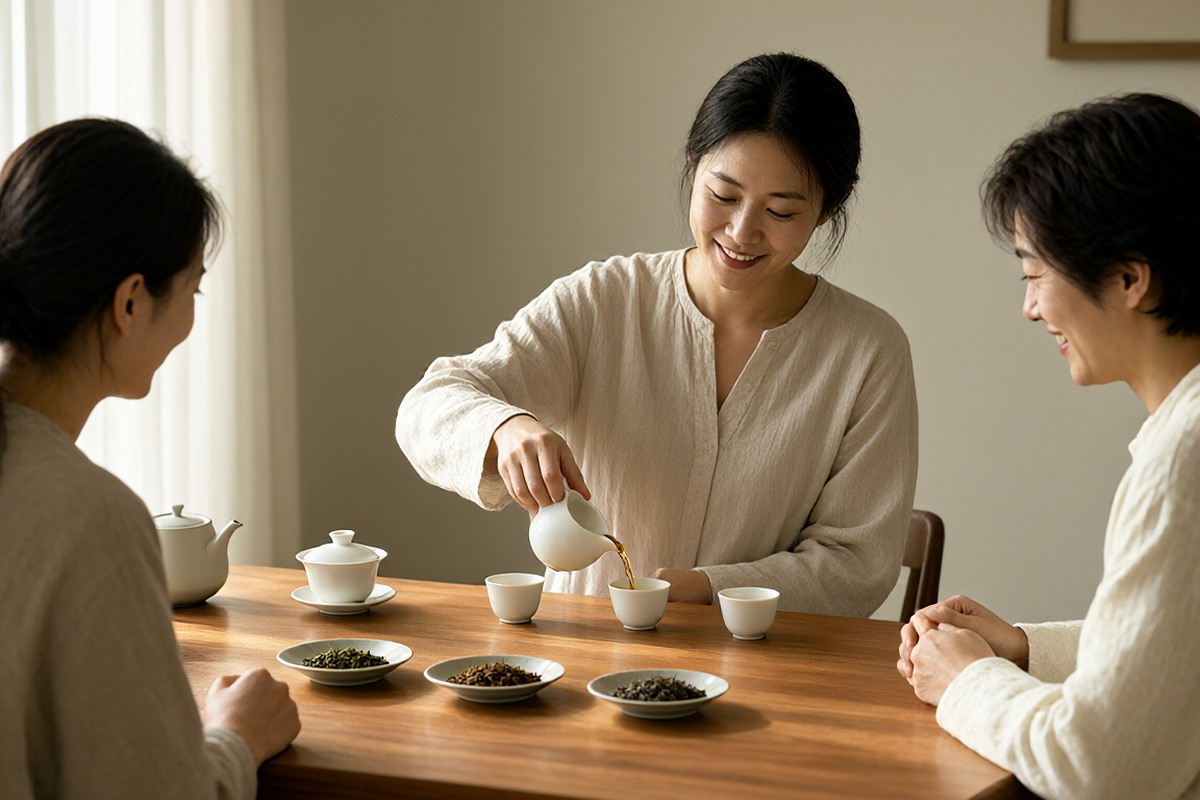
A tea tasting at home does not require a formal tea room, a long table or a host who can identify every mountain and harvest date. It can be a small, generous way to spend an afternoon: three teas, a few cups, a kettle and enough time to notice how the same leaf changes from one infusion to the next.
The most successful home tastings are simple. Too many teas, oversized cups and elaborate food make it harder to taste. A clear order and a comfortable setup do more for the evening than a crowded table of equipment.
Choose a simple format
Start with a guided comparison instead of a blind test. Three teas of the same broad family are easier to compare than three unrelated drinks. You might serve three oolongs with different roast levels, one tea at three infusion lengths or a green, oolong and black tea as a broader introduction.
For a first tasting, choose a theme that can be explained in one sentence. “Three oolongs, from light to roasted” is easier to follow than a list of ten unrelated samples. The structure gives guests a way to remember what they tasted.
Choose teas that show contrast
A useful tasting set has contrast without confusion. One tea can be floral and light, another creamy or mineral, and a third deeper or more roasted. If every tea tastes nearly the same, the comparison becomes harder for a beginner. If every tea is wildly different, the group may struggle to find a common language.
Our loose-leaf oolong sampler is one option for a focused flight, but the method works with any teas you already own. Do not promise a particular origin or grade unless the package confirms it. Use the seller’s information and keep the language descriptive rather than absolute.
How many guests?
Three to six people is a comfortable range for a home table. Small groups make it easier to pass cups, hear the host and compare impressions. A larger group can still taste, but you may need to brew in batches, set up two pouring stations or move to a buffet format.
Assign one person to pour and one to keep time if you expect a larger group. Do not let several people reach across the table with hot kettles. A clear serving side keeps the tasting calm and safer.
Plan the water and kettle
You need more hot water than you think. Each infusion uses water, and the kettle may need to reheat between teas. Fill the kettle before guests arrive and keep a second source of water nearby if the kettle is small. Check the temperature control or use a thermometer if you are comparing delicate teas.
Do not pour boiling water directly onto every leaf. Green and white teas may prefer cooler water, while many oolongs and black teas can take hotter water. The exact temperature depends on the tea. The goal is control, not a universal number.
Set the table in three zones
Make three zones: a brewing zone for the kettle and gaiwan, a serving zone for the fairness pitcher and cups, and a personal zone for each guest’s cup, napkin and tasting notes. Keep the kettle behind the brewing area so no one has to reach across a cup.
A tray keeps spills contained, but the tray should not be so large that it crowds the table. A small bowl for spent leaves or used water helps. If the table is wooden, protect it with a tray or mat rather than relying on a thin cloth alone.
Use matching cups
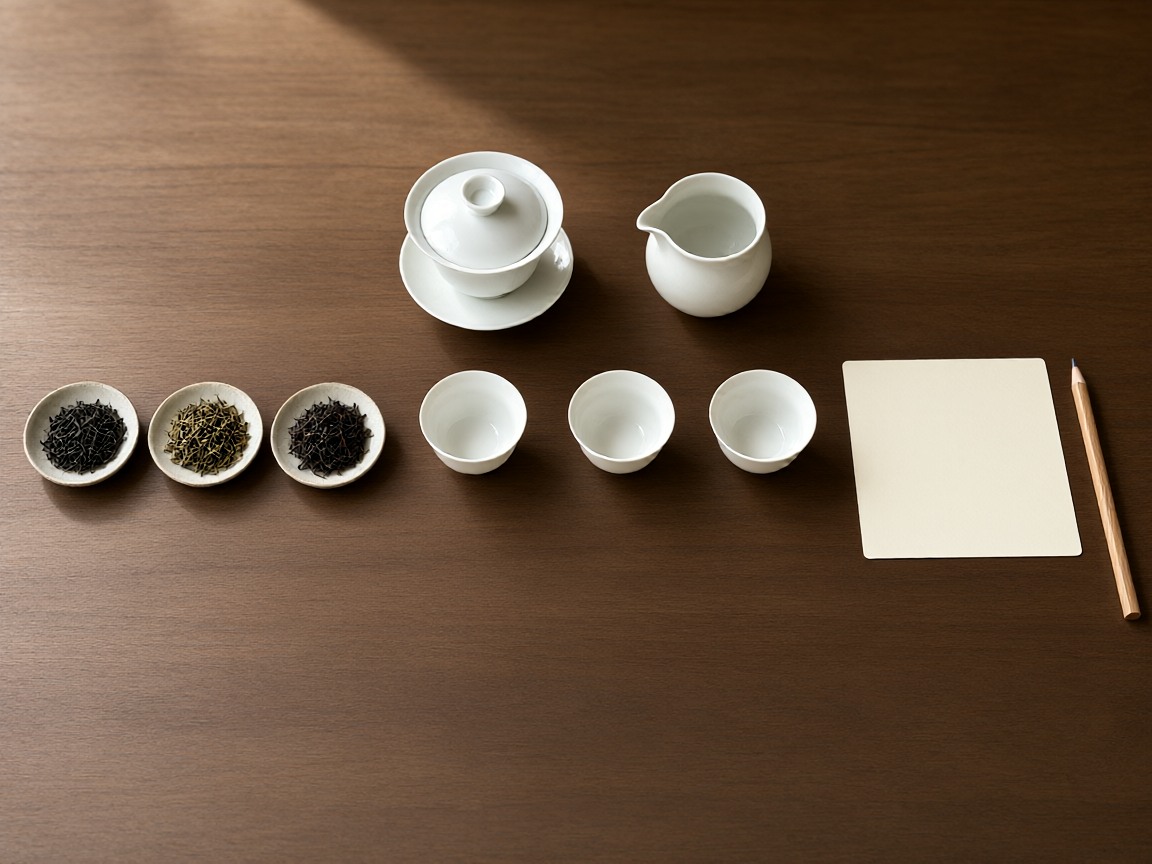
Matching cups make comparison easier. The same shape and volume gives each guest a similar amount of tea. A tasting cup can be small, but it should have a rim that is comfortable to sip. If guests will handle hot cups, leave enough room to hold them without touching the tea.
For a small group, one cup per tea is not always necessary. You can rinse and reuse a cup or give each guest one cup and serve a small amount from each infusion. If you use separate cups, mark them without writing on the porcelain; a small woven coaster or a removable label under the cup is enough.
Choose a brewing vessel
A gaiwan lets you see the leaf and control the pour. A small teapot may be easier for a larger group. Whichever you choose, test it before guests arrive. The vessel should empty into the fairness pitcher without overflowing and without the lid or spout slipping.
Our guide to gaiwan versus teapot explains the tradeoff. For a tasting, consistency matters more than which vessel looks traditional. Use the same vessel, the same cup size and a repeatable pour for each tea.
Set the tasting order
Begin with the lightest tea and move toward the darker, more roasted or more assertive tea. A light floral tea before a heavily roasted tea is easier to taste than the reverse. If you serve a very aromatic tea first, it can linger in the cup and memory, so give the group a glass of water or a plain warm cup between teas.
Do not treat “light to dark” as a rigid rule. Taste the teas yourself before the gathering and put them in the order that shows the clearest contrast. The host’s job is to create a sequence, not to tell guests what they must smell.
Keep the brewing consistent
Use the same leaf-to-water ratio for each tea in the flight unless the tea clearly needs a different ratio. If one tea is brewed much stronger, guests may assume the leaf itself is stronger. Consistency does not mean ignoring the tea; it means making deliberate changes and explaining them.
Start with a short infusion and increase gradually. Pour the full infusion into the fairness pitcher, then divide it into the cups. This is the same serving logic described in our fairness pitcher guide. A pitcher also gives the host time to serve without leaving tea in the brewing vessel.
Make tasting notes simple
Give each guest a small card or a plain notebook. Ask for four observations: aroma, first impression in the mouth, finish and whether the tea changed by the second or third infusion. Do not ask for a score out of ten unless the group enjoys scoring; numbers can make a friendly tasting feel like an exam.
Use language that is easy to share: floral, nutty, creamy, mineral, toasted, fresh, drying or lingering. A note such as “smells like warm wood after rain” is more useful than an unfamiliar expert term. The goal is attention, not vocabulary performance.
Offer small palate cleansers
Plain water is enough. Unsalted crackers, a little plain rice or a small piece of fruit can help between teas without dominating the palate. Avoid strongly flavored food, spicy sauces and heavy sweets during the tasting. If you serve food, put it on a separate small plate and keep it away from the tea tray.
Check guests’ dietary needs before the event. Tea itself may be simple, but a tasting can still involve caffeine and shared cups. Offer a low-caffeine option and a water cup for anyone who prefers not to drink every infusion.
Plan the timing
A three-tea tasting can take 60 to 90 minutes without feeling rushed. That includes setup, introductions, several infusions and conversation. Do not schedule a tasting immediately before another event; the tea and the conversation will both be compressed.
If guests have different experience levels, explain the process briefly instead of assuming everyone knows how to hold a gaiwan. Show the first pour, then let people watch and ask questions. The host can keep the hot kettle and the brewing vessel while guests focus on the cup.
Build a comfortable, safe table
Keep the kettle cord out of the walking path. Place the hot kettle away from the table edge and never pass a full kettle across a guest’s face or cup. Leave room for people to set down phones, napkins and notebooks. If children or pets are present, use a stable tray and keep hot water at a safe height.
Lighting should show the tea liquor and the leaf without glare. A window is useful in the afternoon, but direct sun can make one side of the table uncomfortable. A warm lamp or neutral overhead light can supplement it. Avoid strongly scented candles near the tasting; they compete with the tea.
Useful equipment without overcrowding
A basic setup includes a kettle, brewing vessel, fairness pitcher, cups, a tray, a towel, a bowl for spent leaves and a notebook. A scale and timer are helpful if you want repeatability. You do not need every specialty tool on the first afternoon.
If you use a tea tray with drainage, make sure it is stable and easy to empty. A small linen towel should be dry enough to absorb a spill without leaving moisture under the cups. For tray styles, see how to choose a tea tray.
A simple 60-minute plan
Set the table 15 minutes before guests arrive. Boil water and warm the cups. Introduce the three teas with one sentence each. Brew the first tea for two or three infusions, then pause for a quick note. Move to the second and third teas, keeping the cups and serving amounts consistent. Finish with water and a final comparison.
This plan is a framework, not a performance. If one tea creates a good conversation, stay with it for another infusion. The purpose of a tasting is not to get through the samples; it is to notice something together.
Cleanup that does not rush the end
Empty the fairness pitcher and gaiwan before they sit. Put spent leaves in a bowl or compost container, not down a sink that may clog. Rinse porcelain with warm water and leave it to dry. Do not stack hot cups directly on top of one another. Fold the linen when it is dry enough, and keep the tea tray level during carrying.
Store the unused tea promptly in an airtight container away from light and odor. Label the teas you opened so they do not become anonymous bags in the cupboard. A tasting can become a useful inventory check for the tea shelf.
Tea tasting checklist
- Choose three teas with a clear contrast.
- Set cups, pitcher and brewing vessel in a logical order.
- Provide water, a spit or pour-out option and plain palate cleansers.
- Keep hot water away from the table edge.
- Use a consistent cup size and serving amount.
- Make notes optional and simple.
- Leave time to sit with the tea rather than rushing through.
Frequently asked questions
How many teas should a home tasting include?
Three is a strong starting point. It gives contrast without overwhelming the palate or the table.
Do guests need to know about tea?
No. Explain the order and demonstrate the first pour. The tasting can be an introduction rather than a test.
Can I host a tasting without a gaiwan?
Yes. A small teapot or another controlled brewing vessel can work. The key is consistent pouring and a pitcher that holds the full infusion.
Should I serve food?
Plain water and a neutral cracker are enough. Strongly flavored food makes it harder to compare the tea.
Bottom line
A good home tea tasting is not about showing off equipment. It is about choosing a small number of teas, keeping the table calm and giving everyone enough time to notice the differences. Three teas, matching cups and a reliable pour are enough to begin.