


How to Choose a Tea Tray: Drainage, Size and Material
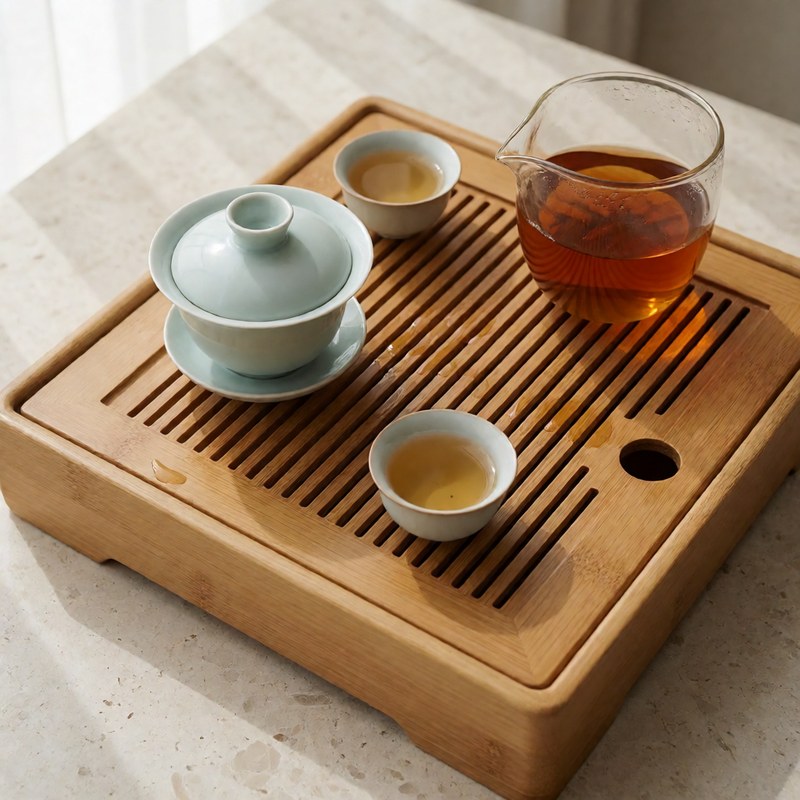
A tea tray is the piece that keeps a tea session from becoming a cleanup job. It catches the water you pour away, holds the cups and keeps drips off the table. Buy the wrong one and you will be wiping the table every few minutes.
What a tea tray actually does
A tray does three things: it collects wastewater, it gives wet cups somewhere to sit, and it defines the working area of the session.
A decorative tray that does none of these is a serving tray, not a tea tray.
Drainage or no drainage
Drainage trays have slots or a grate over a reservoir. Water drains away and the cups stay out of the puddle. They suit gongfu brewing, where a lot of water is poured.
Flat trays have no reservoir. They suit small sessions with a few cups and a little rinsing water, and they are easier to clean.
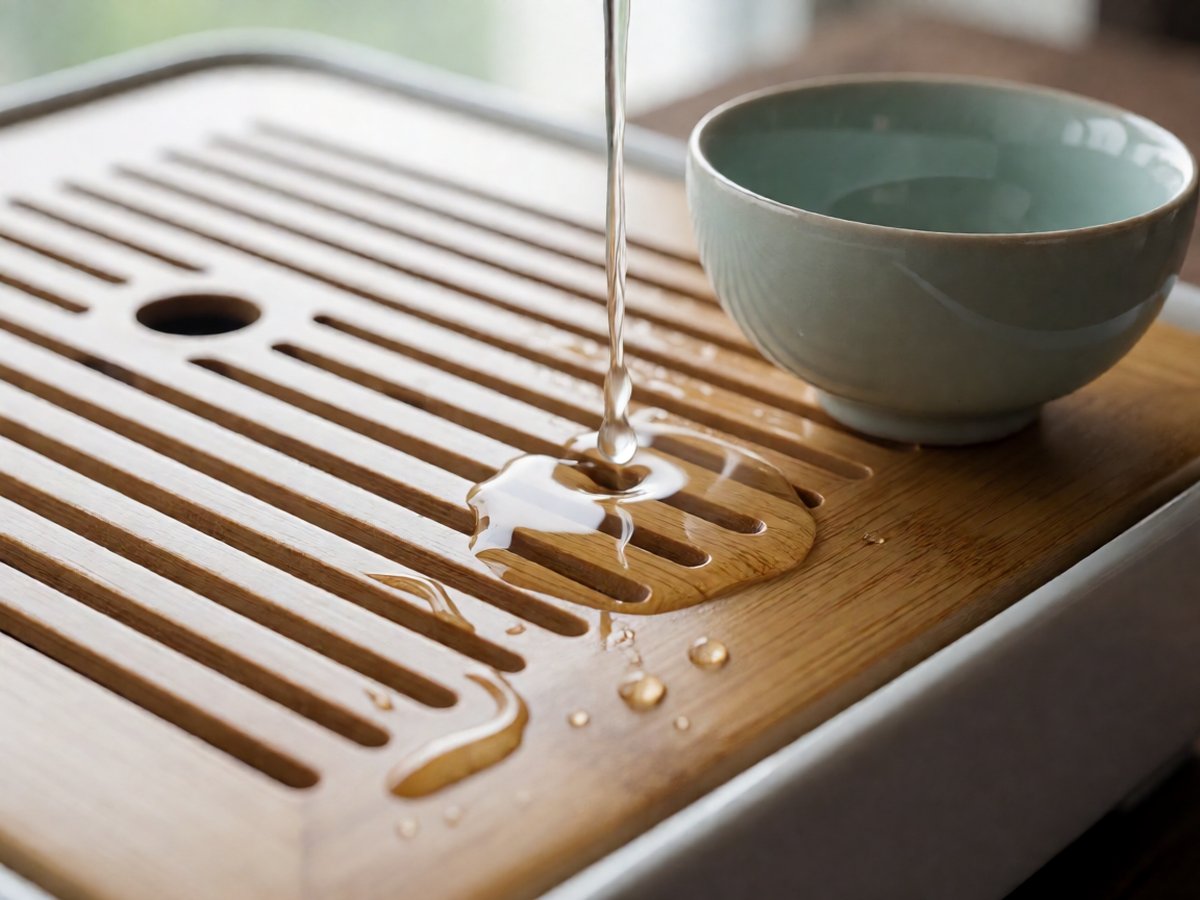
Size against your table
The tray has to hold the teapot or gaiwan, the cups and the pitcher without crowding them. Measure your largest piece first, then add room for cups and hands.
A tray that is too small forces you to set the pitcher on the table, which defeats the purpose.
Material
Bamboo is light, warm and affordable, and it does not crack like ceramic. It can stain and it needs drying. Ceramic trays are heavy and stable, easy to wipe, and can chip at the rim.
Stone trays are the most stable and the heaviest. If the tray will stay in one place, weight is an advantage; if it moves between rooms, it is not.
Depth and lip
A raised lip keeps water on the tray. A tray with a very shallow lip will overflow onto the table during a long session.
Check the reservoir volume if the tray has drainage. A small reservoir fills quickly and has to be emptied mid-session.
Cleaning
Drainage trays need the grate removed and the reservoir emptied after every use. Flat trays just need a wipe and a dry.
Bamboo trays should be dried upright, not left flat with water sitting in the corners.
What to choose
If you brew gongfu style regularly, choose a drainage tray in ceramic or bamboo, sized to your largest teapot plus cups. If you mostly brew western style in one pot, a flat tray is simpler and takes less space.
Either way, check the lip and the weight before you buy. Those two details decide whether the tray stays on the table or ends up in a cupboard.