


Incense Burner vs Incense Holder: Which Do You Need?
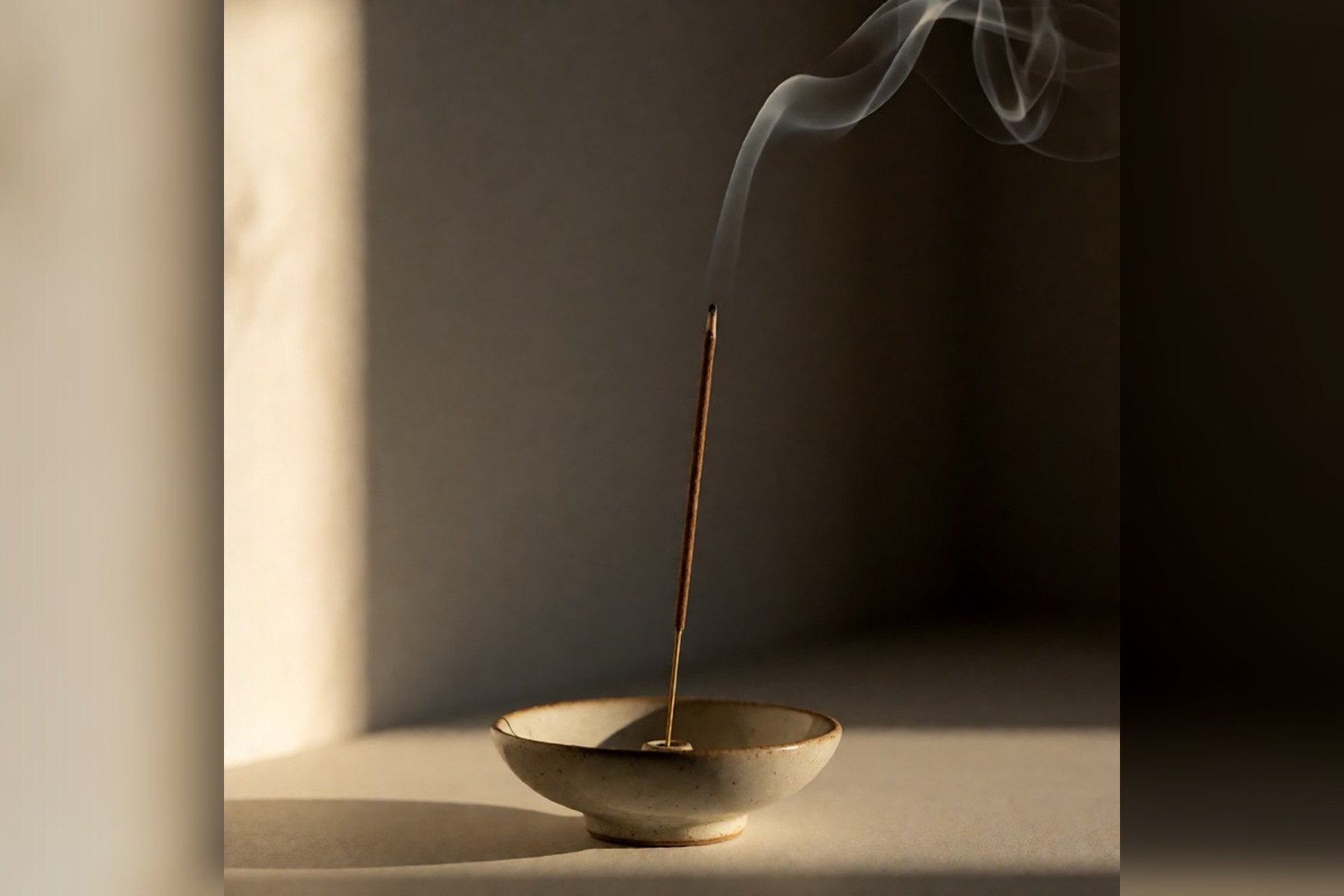
An incense holder and an incense burner overlap, but they solve different problems. A holder is usually a small stand or dish that keeps one stick upright. A burner is a deeper, heat-resistant vessel designed to contain ash, support cones or coils and protect the surface below.
For a single stick beside a tea tray, a low holder is often enough. For cones, longer sessions or a more contained ash area, choose a burner with enough depth and a stable base.
Key takeaways
- Use a holder for a single stick and minimal ash.
- Use a burner for cones, coils or longer sessions.
- The base must be heat-resistant and stable.
- Airflow affects whether incense stays lit.
- Never leave burning incense unattended.
Burner vs holder: the practical difference
A holder is about position. It may be a ceramic dish with a tiny hole, a brass peg or a wooden stand with a metal insert. A burner is about containment. It has walls or a deeper bowl that catch ash, reduce drafts and keep the burning material away from the table.
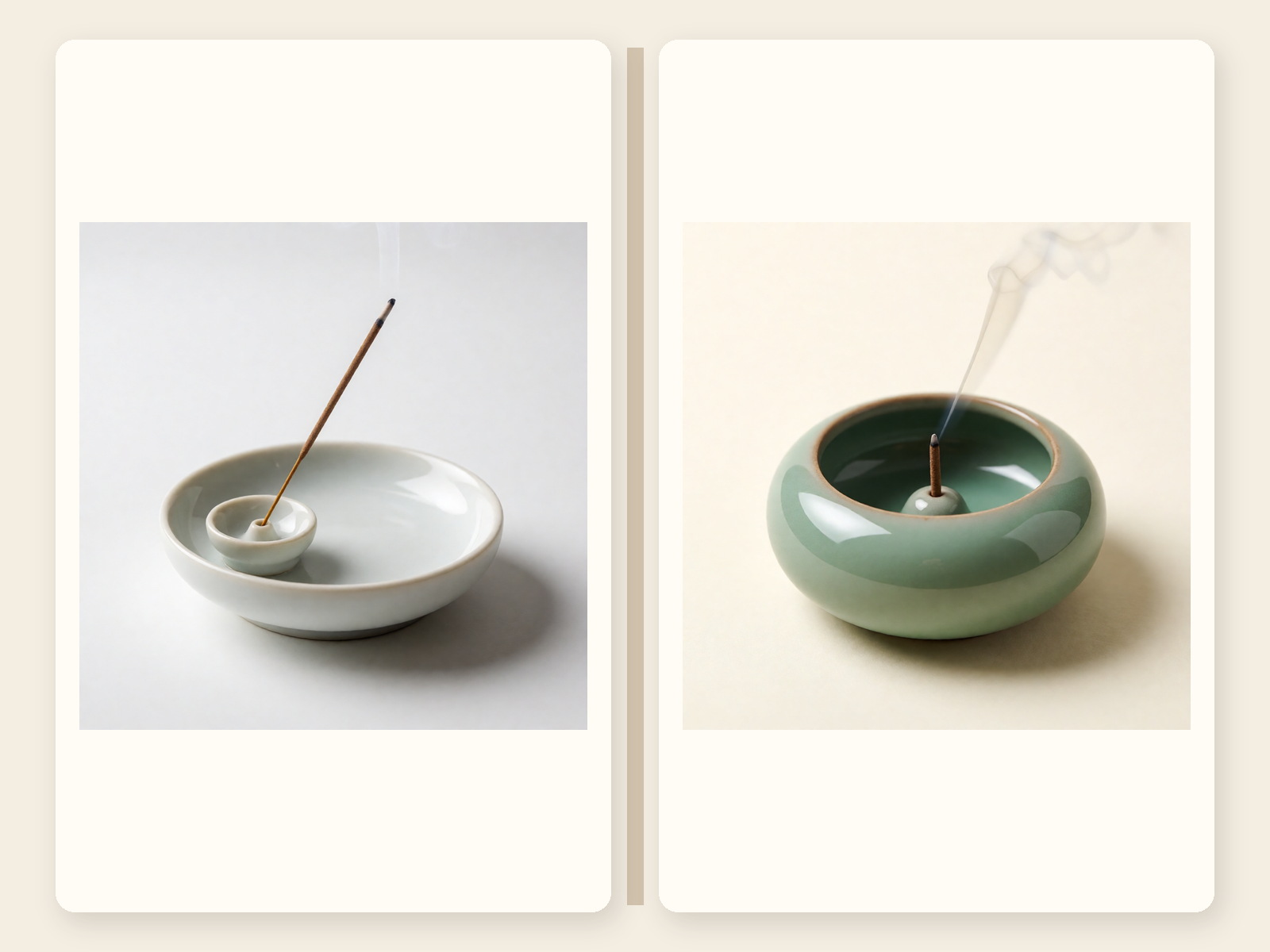
Match the vessel to the incense
Stick incense works in both, but a low holder is easier to place under a tall stick. Cones need a heat-resistant dish with room for ash. Coils need a larger burner or a stand designed for their shape. Check the intended fuel before buying; a narrow hole that fits a stick may be useless for a cone.
Materials and heat
Ceramic and stone are stable and easy to wipe. Brass conducts heat and can look polished, but the base may become warm. Wood and bamboo should only be used with a metal or ceramic insert that keeps heat away from the surface.
Airflow and ash
Incense needs air, but too much draft can make smoke erratic or blow out a flame. A deep bowl can calm airflow, while a low holder keeps a stick exposed. Empty ash regularly. A thick layer can block air or make the next stick unstable.
Placement and safety
Place the vessel on a heat-resistant, level surface away from curtains, paper, pets and children. Keep at least 30 cm of clear space above and around a burning stick. Do not move a hot burner, and never leave incense burning unattended.
Cleaning
Let the vessel cool completely. Remove ash with a dry brush, then wipe ceramic with a barely damp cloth. Avoid soaking unglazed clay or wood. Stubborn resin marks may need a dedicated incense-safe cleaner; test it on a hidden area first.
Which one do you need?
Choose a holder if you burn one stick at a time and want a small footprint near a tea table or desk. Choose a burner if you use cones, coils or longer sessions, or if you want the ash contained in one vessel. If you do both, a medium ceramic burner with a removable stick holder is the most flexible setup.
Frequently asked questions
Can I use a candle dish as an incense holder?
Only if it is heat-resistant, stable and deep enough to catch ash. A lightweight dish can tip over.
Why does my incense keep going out?
Check moisture, airflow and whether the tip is fully lit. A closed or drafty space can both cause problems.
Do I need sand or ash in a burner?
Not always. Follow the burner’s design. A thin ash bed can insulate heat, but too much can block airflow.
Bottom line
Use a holder for precise placement and a burner for containment. Match the vessel to the incense shape, heat and session length. Browse our incense and holders or compare a celadon incense burner for a deeper setup.