


What Does Oolong Tea Taste Like? Floral, Creamy, Green and Roasted
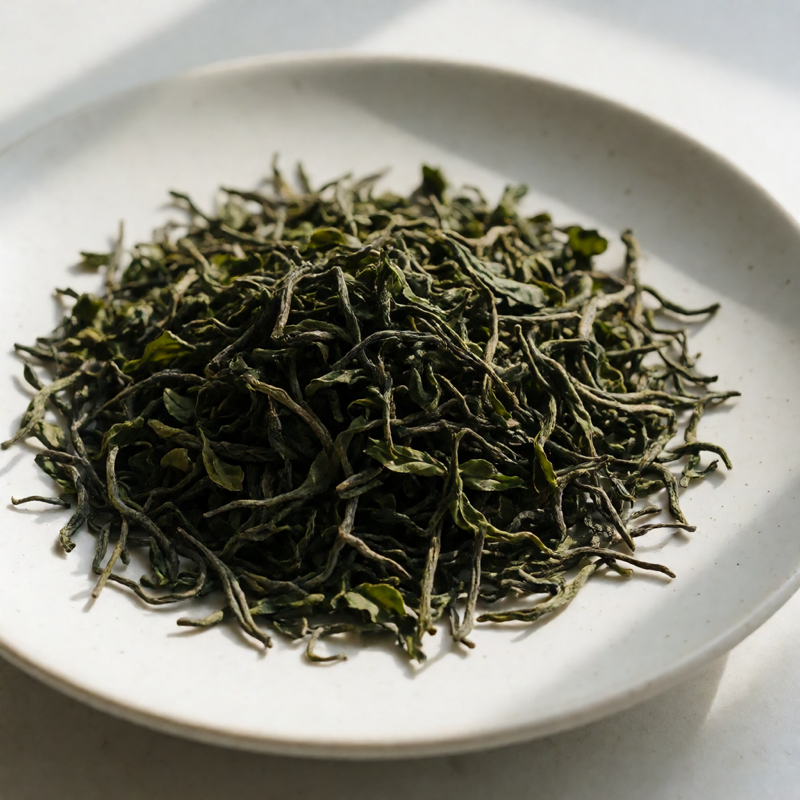
Oolong is less a single flavor than a family of flavors. A lightly oxidized Tie Guan Yin can smell like orchids and fresh cream. A roasted Phoenix oolong may move toward honey, stone fruit and toast. Both are oolong, and both can be delicious. The difference comes from the leaf, the oxidation point and the roast.
Start with aroma
Smell the dry leaf, then the warmed leaf in an empty gaiwan. Light oolongs often show floral, green, creamy or gardenia notes. Roasted oolongs may smell of toasted grain, caramel, cocoa or dried fruit. The wet leaf after the first infusion is often the clearest expression of the tea's style.
Floral and green
Lightly oxidized oolongs can taste fresh without being grassy. Look for orchid, lilac, magnolia, cucumber or cream. The liquor may be pale gold and feel soft rather than thick. These teas are usually brewed at a slightly lower temperature and with shorter steeps so the aromatics do not become bitter.
Creamy and buttery
Some oolongs have a texture that reads as creamy even when there is no milk. That impression can come from amino acids, the leaf's natural sweetness and a soft mineral finish. It is a mouthfeel rather than an added flavor. A rounded texture is often a sign that the tea was processed cleanly.
Honey, fruit and roast
More oxidation and roast bring honey, peach, apricot, raisin and toasted notes. A heavily roasted oolong can taste darker and drier, with a finish that lingers. If the roast is too strong, it can cover the leaf's aroma; if it is balanced, the tea smells warm without tasting burnt.
Bitter is not the same as strong
A strong oolong should still have clarity. Bitterness usually points to too much leaf, water that is too hot or a steep that ran too long. Astringency feels drying on the tongue; it is not the same as a firm mineral finish. Adjust one variable at a time before deciding the tea is poor quality.
How processing shapes the flavor
Oxidation creates the fruit and honey direction; roast adds toast, caramel and dried-fruit depth. A light oolong is not simply a weaker dark oolong. It is a different point on the spectrum, and it usually rewards cooler water and shorter steeps.
With food, light floral oolong works with fruit, mild pastries and simple seafood. A roasted oolong stands up to nuts, dark chocolate and richer dishes. Very bitter tea will fight almost everything, which is another reason to fix the brew before judging the pairing.
A simple tasting method
Use the same gaiwan and water for two teas. Smell the dry leaf, then taste the first three infusions. Note aroma, sweetness, texture and finish separately. The tea you remember after ten minutes is often the one that suits your palate, not the one with the loudest first impression.
Try a lighter and a darker style through the loose leaf tea sampler, or compare Tie Guan Yin with Phoenix oolong.