


Incense Holder Materials: Ceramic, Brass, Wood and Stone
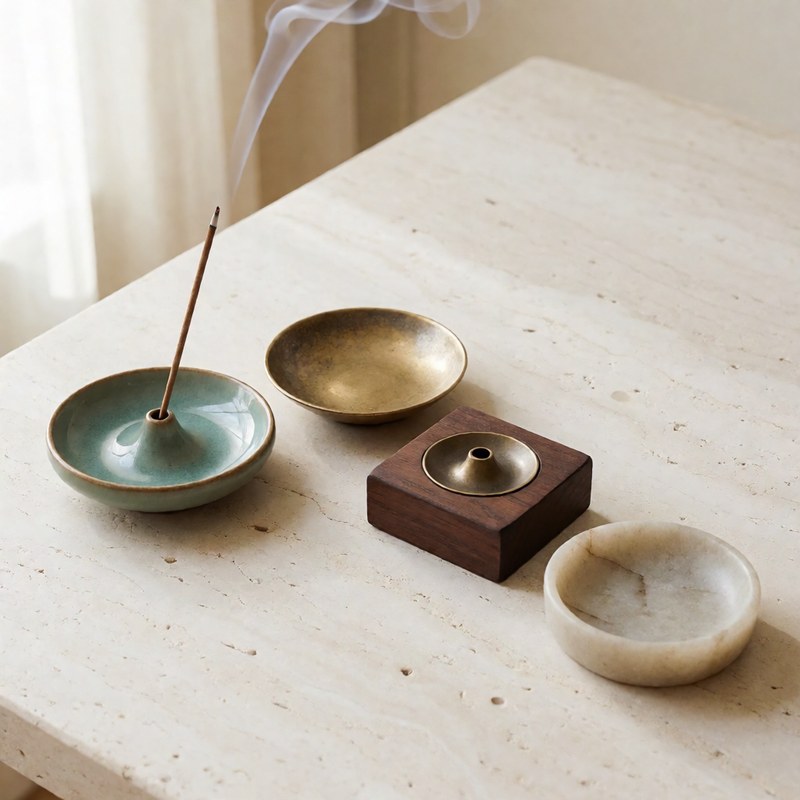
An incense holder looks like a decorative object. It is really a heat and ash management tool. The material decides how it handles both, and that is what separates a holder that works for years from one that cracks in a month.
Why material matters more than shape
Incense burns at a steady low heat, but the tip is hot and ash falls continuously. A holder has to survive repeated heat cycles and still be easy to clean.
Shape affects how the incense sits. Material affects whether the holder survives that.
Ceramic and porcelain
Glazed ceramic is the most forgiving choice. It does not burn, does not stain easily and wipes clean. Unglazed ceramic absorbs oils and ash and slowly takes on a patina, which some people want and others do not.
Thin porcelain looks refined but can crack if a burning stick is left to burn down against the surface.
Brass and copper
Metal holders are stable and easy to clean. Brass develops a patina that most people either like or polish away. Copper conducts heat, so the base can get warm.
Metal is the practical choice for stick incense because ash does not cling to it.
Wood
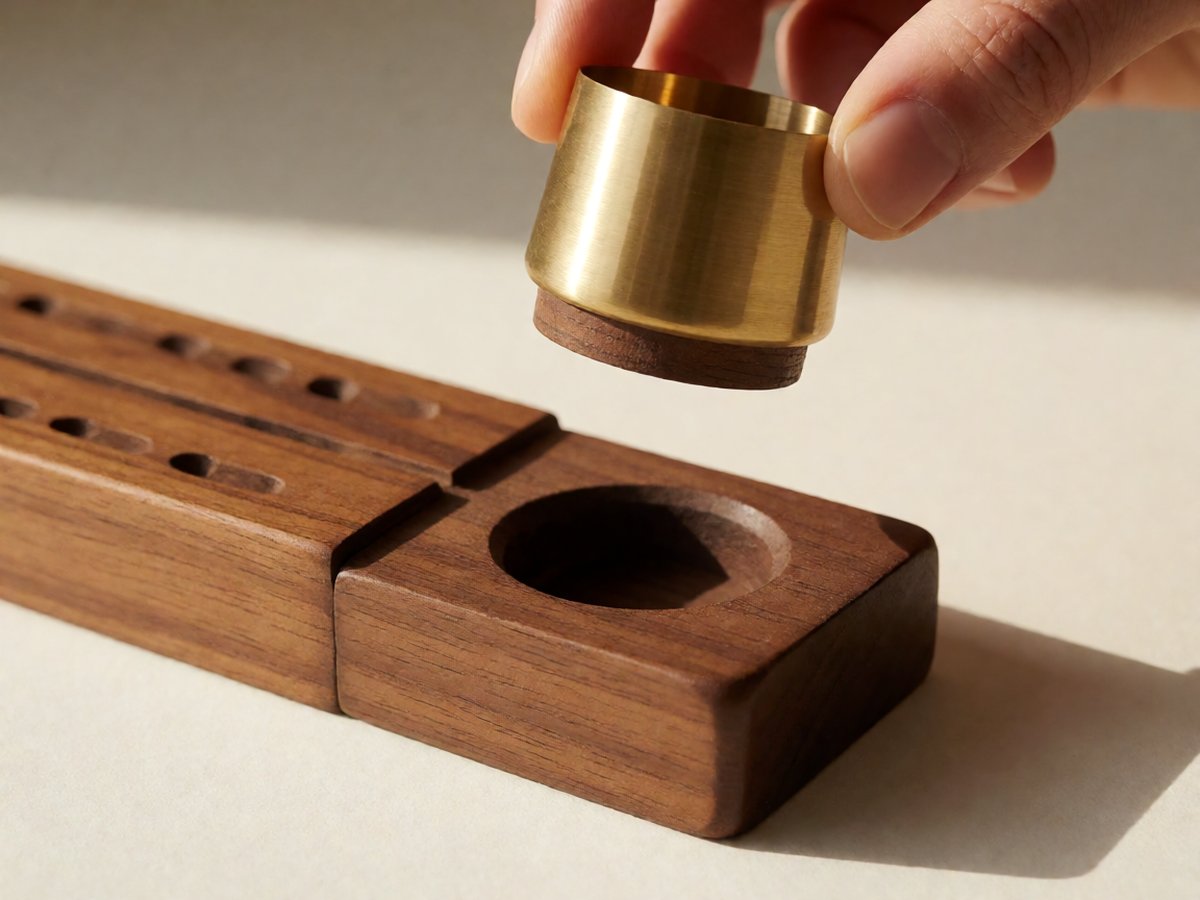
Wood looks warm and suits a home interior. It also burns. A wooden holder needs a metal or ceramic insert where the incense actually sits.
Without that insert, a stick burning down will scorch the surface and leave a permanent mark.
Stone
Stone is heavy, stable and does not move when a stick is inserted. It handles heat well. The trade-off is weight and the risk of chipping if it is dropped.
Softer stones can absorb oils and stain over time.
Glass
Glass is easy to clean and shows ash clearly, which makes it a good choice for a desk or a small space. It can crack from thermal shock if a hot tip touches a cold surface.
The insert is the real working part
Whatever the outer material, the part the incense actually touches should be heat resistant and replaceable. A holder with a removable insert lasts longer because the insert takes the wear.
Ash and airflow
A good holder has a shallow bowl or a lip that keeps ash from sliding off the table. It should not be so deep that ash builds up and smothers the stick.
Empty it before ash reaches the rim. A full holder is the main cause of scorched tables.
Matching the holder to the incense
Stick incense needs a hole sized to the stick. Cone incense needs a flat heat-proof dish. Coil incense needs a holder with a clip or a hanging point.
Buying a holder before deciding which form you burn most is the usual reason a holder ends up unused.