


How to Choose a Tea Cup for Daily Use
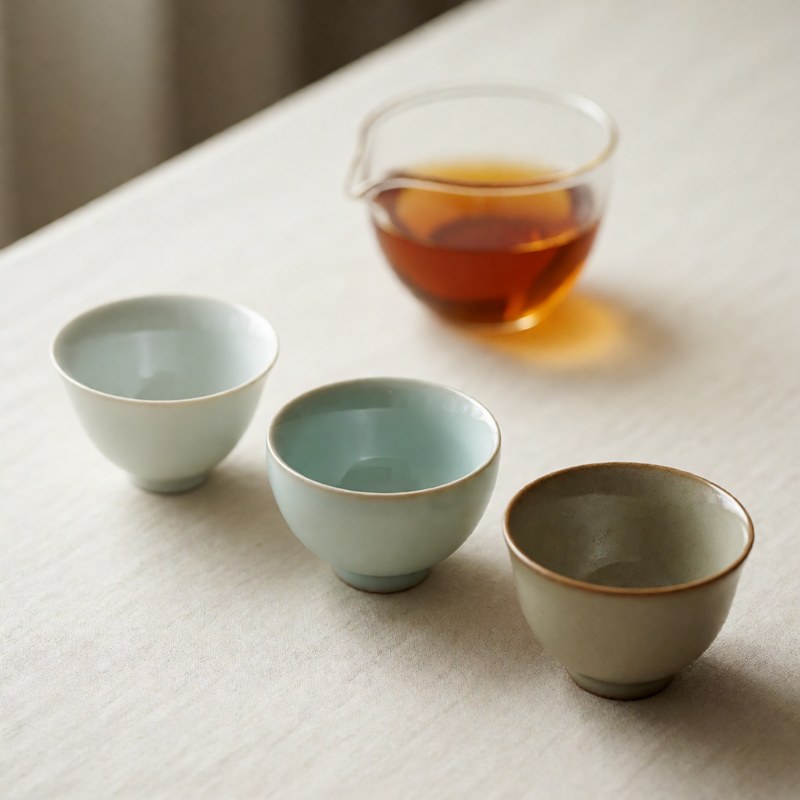
A tea cup is used more often than any other piece of teaware you own. It is also the piece most often bought by appearance alone, which is why so many cups end up in a cupboard after a month.
Start with how much you actually drink
A small cup of 40 to 60 ml suits gongfu brewing, where you pour several short infusions in a session. A larger cup of 150 to 250 ml suits western-style brewing, where one steep fills the cup.
Buying a small cup and then filling it from a large teapot is the most common mismatch. The tea goes cold between pours.
Wall thickness changes the taste
A thin porcelain wall cools tea quickly and lets you drink sooner. A thicker stoneware or celadon wall holds heat longer, which suits darker teas and slower drinking.
Thin walls also let you feel the heat through the rim, which many people find pleasant and others find distracting.
The rim
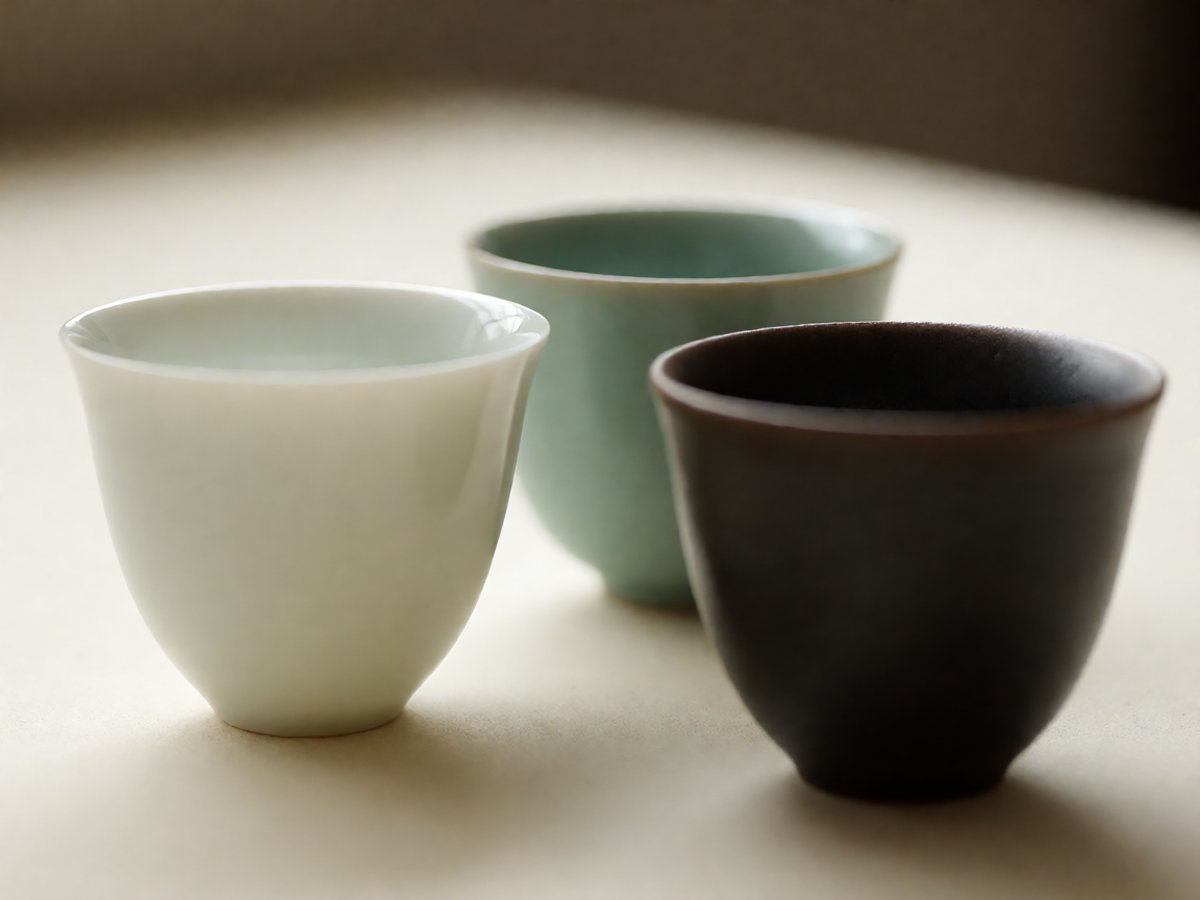
The rim is where the cup meets your mouth, so it matters as much as the shape. A rim that flares outward is easier to drink from; a rim that curves inward concentrates the aroma but can feel sharp.
Run a finger along the rim before buying. Any roughness will become noticeable on the tenth cup, not the first.
Glaze and interior colour
A white interior shows the true colour of the tea, which helps when you are learning a new tea. A coloured or patterned interior hides the liquor but can make it harder to judge strength.
Unglazed interiors are for specific teas and need their own care. Do not use an unglazed cup for every tea or it will take on a mixed flavour.
Handle or no handle
Handled cups suit hot western brewing and people who drink slowly. Handleless cups suit gongfu brewing, where the cup is small and the tea is drunk quickly.
If you drink very hot tea, a handle is not a detail. It is the difference between comfort and a burned finger.
Foot ring and stability
A cup with a defined foot ring sits more steadily and is less likely to tip when you set it down in a hurry. A cup with a rounded base looks softer but rocks more on an uneven table.
Cleaning
Smooth glazed interiors rinse clean and can go in a dishwasher if the maker allows it. Unglazed interiors need rinsing with hot water and air drying, and should not be stored damp.
Narrow cups with a rolled rim are harder to dry. If you drink daily, choose something you can dry in one motion.
A practical shortlist
For daily drinking, one thin-walled white porcelain cup of about 60 ml and one larger handled cup of about 200 ml covers most situations. Add a thicker celadon cup later if you drink darker teas slowly.
That is enough to start. Cups accumulate on their own once you know what you actually reach for.