


Celadon, Porcelain and Stoneware: What You Are Actually Buying
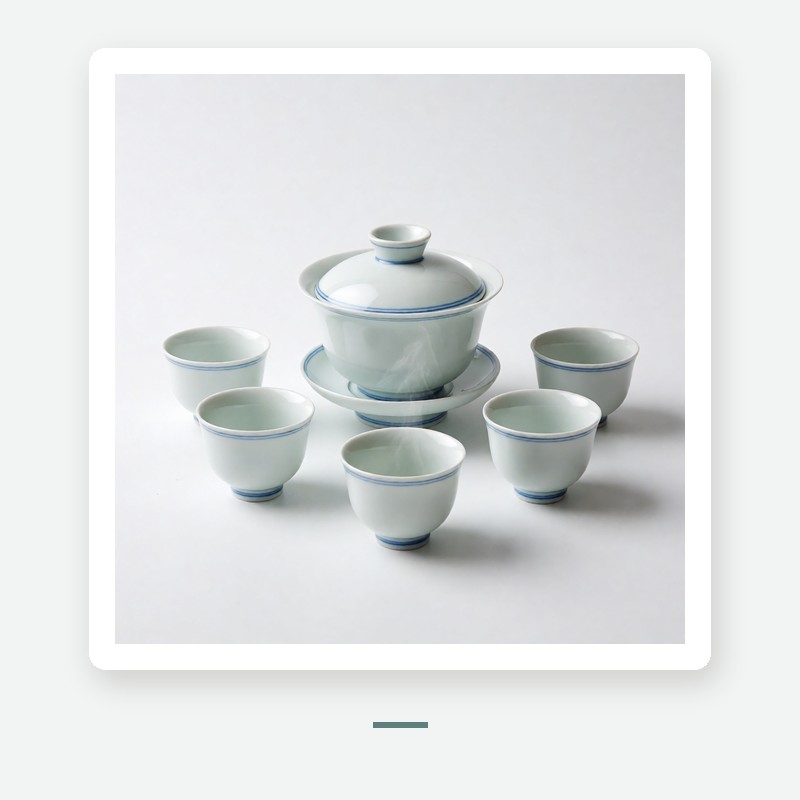
Shop pages mix these words freely, which makes them sound like three options on a menu. They are not. Celadon is a glaze. Porcelain is a clay body. Stoneware describes a firing range. A single piece can be more than one of them at once.
Porcelain
Porcelain is made from kaolin clay and fired high, commonly around 1300°C. At that temperature the body vitrifies: it becomes glassy, non-porous and translucent where it is thin. Hold a porcelain cup to a lamp and you can often see light through the wall.
That density is why porcelain is the default for tasting cups. It does not hold onto the previous tea, and it does not change the taste of what is in it.

Stoneware
Stoneware is fired lower, typically somewhere around 1200°C. It is dense and durable but usually opaque. The body stays slightly more open than porcelain, which is why stoneware is used for everyday cups and for many rustic teapots.
Unglazed stoneware will absorb some of what it holds. That is either the point or a problem, depending on what you are brewing.
Celadon
Celadon is a glaze, not a body. It gets its colour from a small amount of iron oxide in the glaze, fired in a reducing atmosphere where oxygen is starved from the kiln. The result is the blue-green range that runs from pale grey-green to deep olive.
The famous Chinese celadon comes from Longquan in Zhejiang, where kilns have produced it since the Song dynasty. The colour is genuinely difficult to control: the same recipe in a slightly different kiln position gives a different green. That variation is normal and is part of what people are buying.
Reading a product listing
Ask two questions. What is the body — porcelain or stoneware? What is the finish — glazed, unglazed, or celadon? A celadon-glazed porcelain cup and a celadon-glazed stoneware cup look similar in a photograph and behave differently in use.
Everyday care
All three are dishwasher-safe in principle, and all three last longer if you wash them by hand. Glazed pieces handle hot water. Unglazed stoneware should not sit in water for long periods, because the body will take it in.
For anything you drink from daily, check the rim. Thin, well-finished rims are the difference between a cup you keep reaching for and one that sits in the cupboard.